The Internet Loves These “Gay Sheep.” The Real Story Is Much Darker.

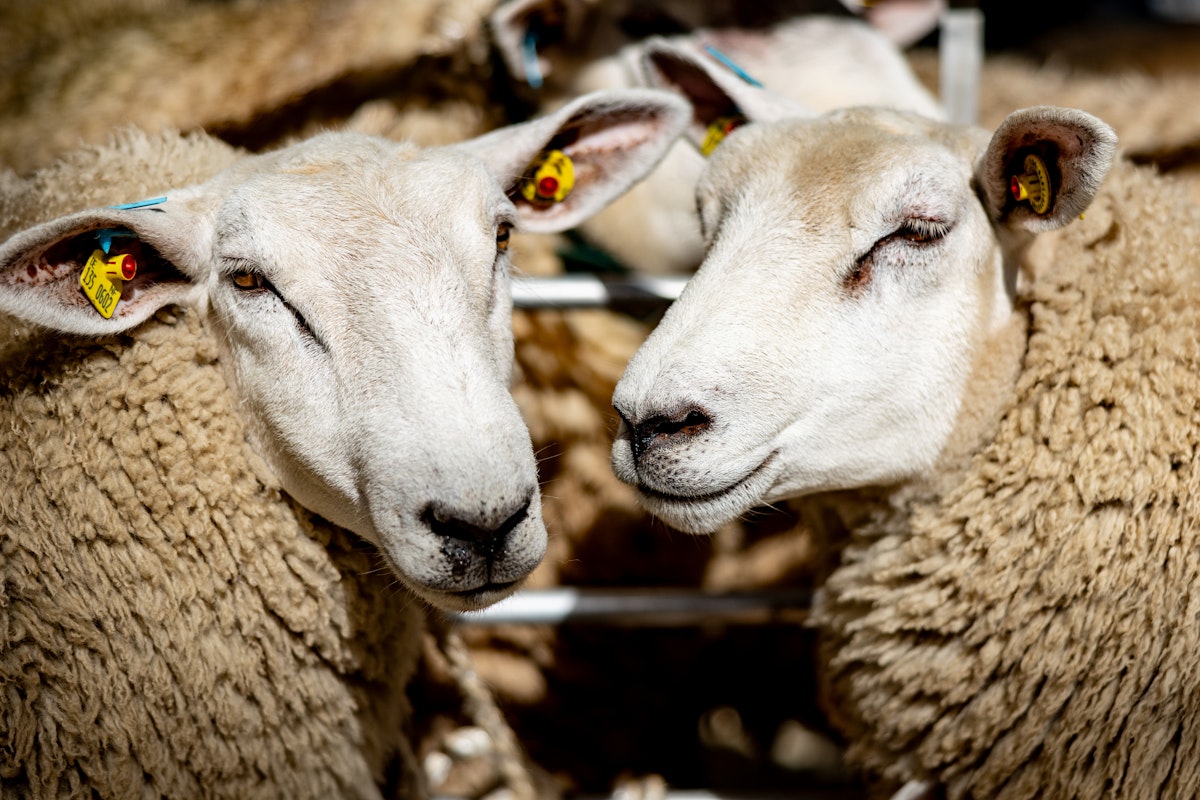
Garnering support for farmed animals is difficult and expensive, particularly if one wants to do something more than just convince people to abstain from ordering lamb. As evidenced by the work of scholars like Elan Abrell, sanctuary farms—those that save animals from grim fates in farming and let them live out their lives as naturally as possible—take land, money, and hard work and have almost no conceivable way of turning a profit. In this sense, Rainbow Wool, in selling wool from the rescued animals so they pay their way—and, yes, helping support queer charities in Germany—is a way of commodifying animals as gently as possibly while saving them from the butcher’s blade. And selling products means advertising, like having high-visibility runway shows of gay fashions knitted from the wool of gay rams.
Anthropomorphizing animals as “gay” may be a worthwhile first step in getting people to recognize the sexual exploitation that nearly all farmed animals endure. And in its own limited way, Rainbow Wool does this. Buying some fancy wool is hardly enough to address the harms of animal farming, but that doesn’t mean it’s worthless. When it comes to the politics of meat, people often pit individual action against transformative “systemic” change. In our forthcoming book, we argue that it’s wrong to treat individual and collective actions as either/or; we need both. Sometimes small incremental changes by individuals can help create new norms that lead to policy changes and eventual structural transformation.
Schmidt may indeed be doing some good, but it’s not nearly good enough. In fact, the farm on which Rainbow Wool’s gay rams are housed is also a commercial sheep farm, where other sheep are sent to slaughter. “It is a great capitalist story framed about being about gayness,” Carol Adams explained to us over email, of the Grindr fashion show. But “it doesn’t challenge animal agriculture in terms of assumptions about the requirement that animals be productive; nor about making females pregnant, nor about wearing wool.” Neither Rainbow Wool nor Grindr responded by publication time to a request for comment for this piece.